If you are ordering branded apparel for your business, you will almost always land on the same question: should your logo be embroidered or DTF printed? Both are excellent, widely used decoration methods, but they shine in different situations. This guide gives you the honest trade-offs so you can choose with confidence.
Quick verdict: Choose embroidery when you want a premium, long-lasting look on polos, hats, jackets and uniforms. Choose DTF printing when you need full-color, highly detailed artwork on tees and hoodies, or when you are ordering smaller quantities.
What Is Embroidery?
Embroidery stitches your design directly into the fabric using thread. Your logo is first converted into a digital stitch file, then sewn onto the garment by a programmable embroidery machine. The result is a raised, textured, dimensional finish that instantly reads as professional and high quality.
Because it is thread rather than ink, embroidery does not fade, crack or peel. It is the classic choice for corporate wear, and it is what most people picture when they think of a polished company logo on a chest pocket or a cap.
What Is DTF Printing?
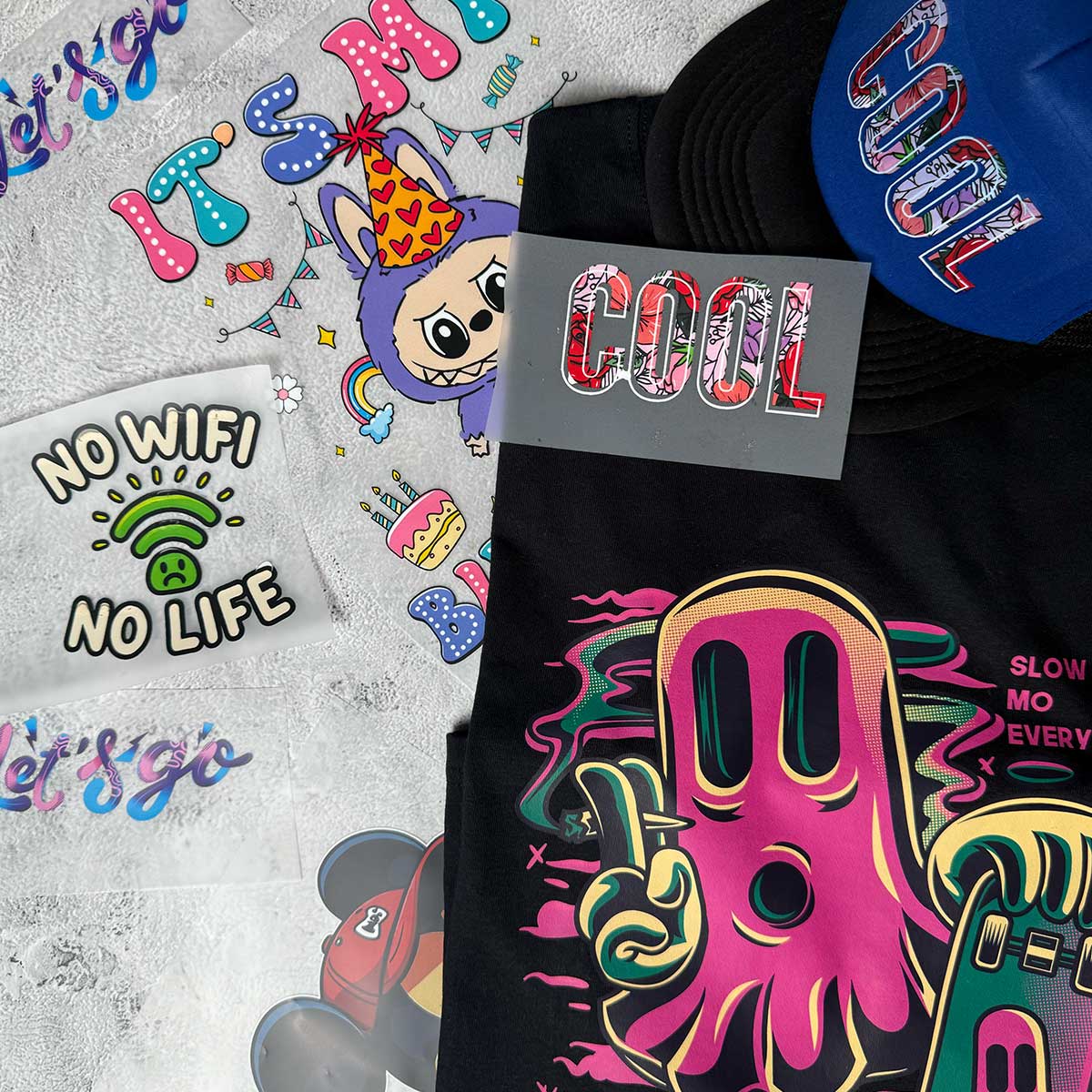
DTF (Direct-to-Film) printing prints your design onto a special film, applies a powdered adhesive, then heat-presses the transfer onto the garment. The finish sits on top of the fabric as a thin, flexible layer of ink.
DTF reproduces full-color artwork — photographs, gradients, fine detail and unlimited colors — with no extra cost per color. It works on cotton, polyester, blends and more, which makes it incredibly versatile for custom t-shirts, hoodies, tote bags and event apparel.
Durability
Embroidery wins on raw longevity. Stitched thread can outlast the garment itself, holding up to repeated industrial washing, sun exposure and daily wear without losing its look. For uniforms worn every shift, that durability is hard to beat.
Modern DTF is also very durable — a quality transfer that is pressed and cared for correctly will typically survive 50 or more wash cycles while staying vibrant. The main rule is simple: wash inside out in cold water and skip the high-heat dryer. For heavy-duty daily use, embroidery still has the edge, but DTF is far more durable than older heat-transfer or vinyl methods.
Look & Feel
These two methods simply look different, and neither is "better" — it comes down to the impression you want to make.
- Embroidery is raised and textured. It feels premium and substantial, and it photographs beautifully on polos, caps and jackets.
- DTF is smooth and flat. It lays a thin layer of color onto the fabric, so it is ideal for big, bold, multicolor graphics where embroidery would be impractical.
If your logo has tiny text, gradients or photographic detail, DTF will reproduce it cleanly while embroidery may lose the finer elements. If your logo is simple and you want it to feel high-end, embroidery is the move.
Cost & Minimums
Pricing works differently for each method, and that is where a lot of the decision is made:
- Embroidery is priced mainly by stitch count. A small, clean left-chest logo is very affordable; a large or highly detailed design with lots of stitches costs more.
- DTF is priced mainly by print size, and color is free. A full-color, complex design costs the same as a one-color one of the same size, which makes it the budget-friendly choice for detailed artwork.
For small quantities and one-off runs, DTF is usually the more economical path because there is no digitizing setup like embroidery requires. For ongoing uniform programs with a consistent logo, embroidery's per-piece value is excellent.
Still weighing the options? Our full guide to printing methods breaks down every decoration technique we offer side by side, so you can match the method to each garment and budget.
Best Garments for Each
Best for Embroidery
- Polo shirts and dress shirts
- Caps, hats and beanies
- Jackets, vests and outerwear
- Aprons, bags and structured items
- Professional uniforms worn daily
Best for DTF Printing
- T-shirts and tank tops
- Hoodies and sweatshirts
- Large back or full-front graphics
- Full-color, photographic or multicolor designs
- Event, promo and small-batch runs
Which Should You Choose?
Here is a quick decision list to settle it:
- Want a premium, professional look on polos, hats or jackets? Choose embroidery.
- Need maximum durability for daily uniforms? Choose embroidery.
- Have a full-color, detailed or photographic design? Choose DTF printing.
- Printing on t-shirts or hoodies? DTF is usually the better fit.
- Ordering a small quantity? DTF is typically more cost-effective.
- Want the best of both? Combine them — embroider the chest logo and DTF a bold graphic on the back.
There is no single right answer for every order, which is exactly why we offer both. The best choice depends on the garment, the artwork, the quantity and the impression you want your brand to make.
FAQ
Is DTF printing or embroidery more durable?
Embroidery is the most durable option — stitched thread can outlast the garment itself and resists fading and washing. Quality DTF prints are also very durable and typically last 50 or more washes when cared for properly, but embroidery has the edge for heavy daily wear.
Which is cheaper, DTF printing or embroidery?
It depends on the design and quantity. Embroidery is priced mainly by stitch count, so large or detailed logos cost more, while DTF is priced by print size and is usually more affordable for full-color or highly detailed artwork and for small quantities.
Can you combine embroidery and DTF printing on the same order?
Yes. Many businesses use embroidery for a polished left-chest logo and DTF printing for a large, full-color graphic on the back or sleeve. We can mix methods across an order so each design uses the best technique.
Whichever direction you lean, our team can guide you to the right method for your apparel and budget. Send us your logo and we will recommend the best approach and put together a free quote.